John Leopold Brodie, born in Riga, patented his helmet design in August 1915. It was simple to press from a single sheet of steel and protected the wearer from shell fragments and air-burst shrapnel. The first helmets reached British troops in September 1915, at first only 50 per battalion.
By the summer of 1916 the first million had been delivered. About 7.5 million Brodie-type helmets were made by the end of the war, including American M1917s.
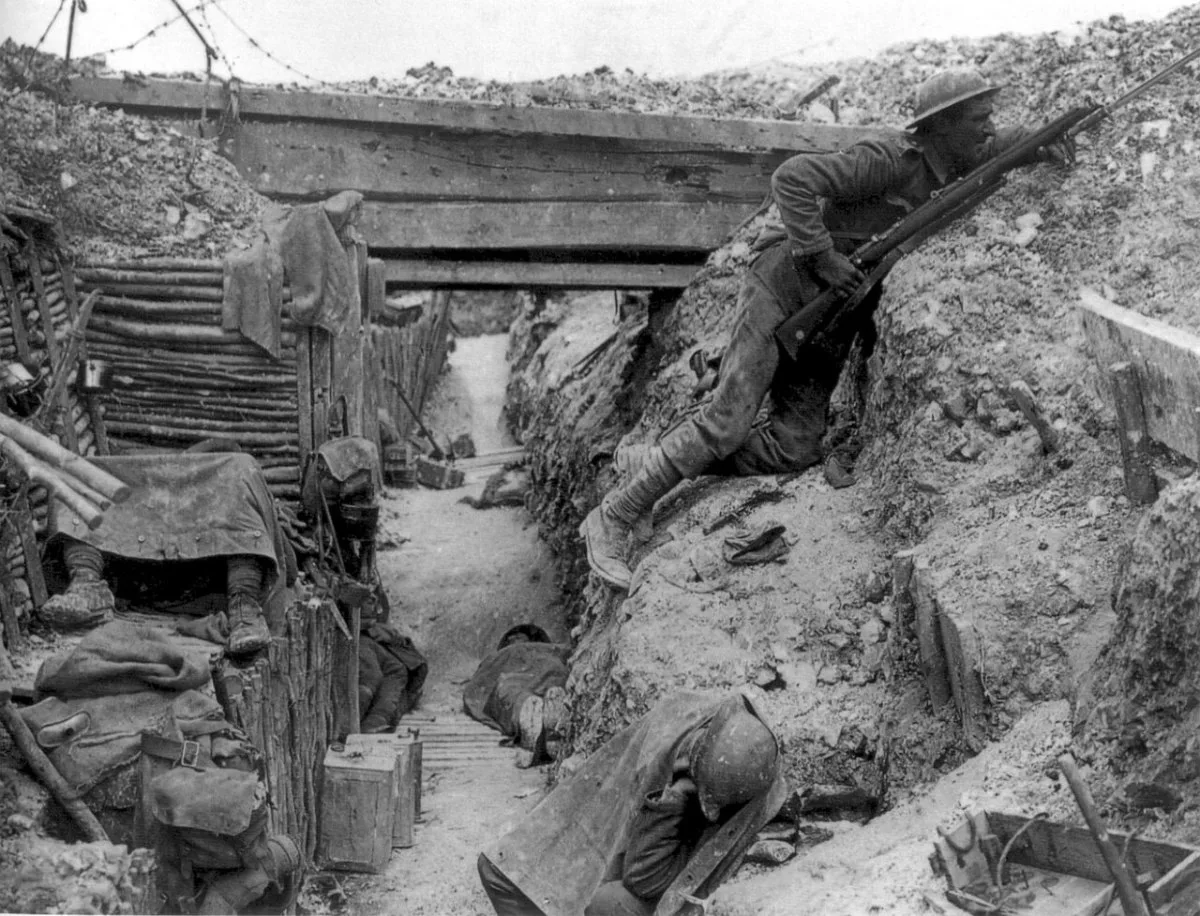

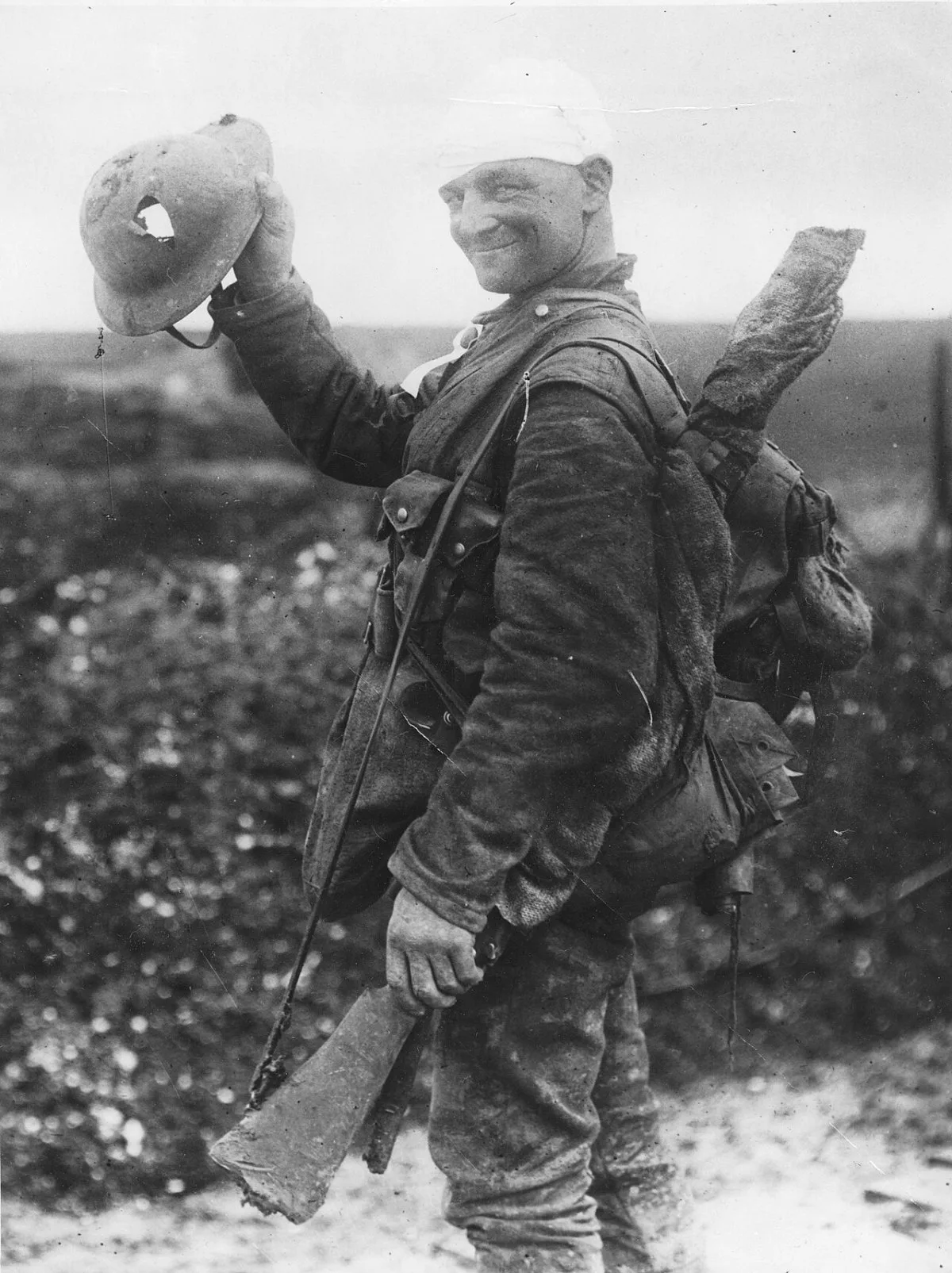

Type A and Mk I
- Type A ("War Office pattern"). The original 1915 helmet, made of mild steel with a raw, unfolded edge.
- Mk I. Introduced in spring 1916. It is made of Hadfield manganese steel, about 12 percent manganese, and adds a separate folded rim around the edge. Collectors call these "rimmed" shells.
- Mk I*. In 1938, old Mk I shells were refitted with a new liner and chinstrap and reissued. It was the standard British helmet at the start of WWII, alongside the new Mk II.
A lined Mk I weighs about 2.4 lb (1.1 kg).
How to recognize a British-made Mk I
- Split-pin lugs. The chinstrap lugs are fixed to the shell with split pins. American M1917s use rivets.
- Rubber "doughnut". A rubber ring pad sits at the crown of the liner. The Americans didn't adopt it.
- Red liner stamp. Many oilcloth liners carry a red ink stamp reading "Brodie's Steel Helmet Registration Number, War Office Pattern".
- Maker stamps. A maker's initials and a heat lot number are stamped under the brim. Recorded makers include Thomas Firth & Sons (FS), Hadfield, Hutton & Sons, James Dixon & Sons, W. Beardmore of Glasgow and W. & E. Viener (V).
Is it a WWI Mk I? Four checks
- Find the rim. A folded separate rim means Mk I. A raw edge means a Type A, or a different helmet altogether.
- Look at the chinstrap fittings. Split pins point to British manufacture; rivets to American.
- Check the liner. A WWI liner has felt pads and oilcloth. A webbing chinstrap and later liner mean a Mk I* conversion from the late 1930s.
- Judge painted insignia carefully. Divisional insignia and textured paint add value, and are added later for that reason. Look for even wear across paint and insignia.
What Brodie Mk I helmets sell for
Complete WWI helmets with liner and chinstrap usually sell for $300–$600. Helmets with period divisional insignia sell for more, and bare shells for less.
| Helmet | Where | When | Price |
|---|---|---|---|
| Hadfield, complete, later WWII net | Dealer, asking | 2026 | $395 |
| Hutton & Sons, texture paint, Guards Division insignia | Dealer, sale price | 2024 | $595 |
| 1916-era, faint battalion markings, liner and chinstrap | Dealer, asking | Archive | £395 |
| Mk I rimmed shell with a WWII Mk III, two helmets | Halls auction, sold | Aug 2024 | £300 |
Single sales and asking prices, not a price guide.
Related helmets
M1917 helmetAmerica's copy of the British Brodie. The commonest WWI helmet you can buy.British Mk II helmetThe WWII Tommy helmet. Cheap, common and full of markings to read.Adrian M15 helmetThe crested French helmet of WWI. Over twenty million Adrians were made.
Sources
- Brodie helmet: Wikipedia: design, patent, materials, production
- International Military Antiques: maker codes and British split-pin construction
- Halls Fine Art, lot 93
Was this page helpful?