Historical photographs of helmets being made and worn, from public collections such as the US National Archives and the Library of Congress.
Every photo on this page is in the public domain, and each caption gives its source. More are added as they're checked.
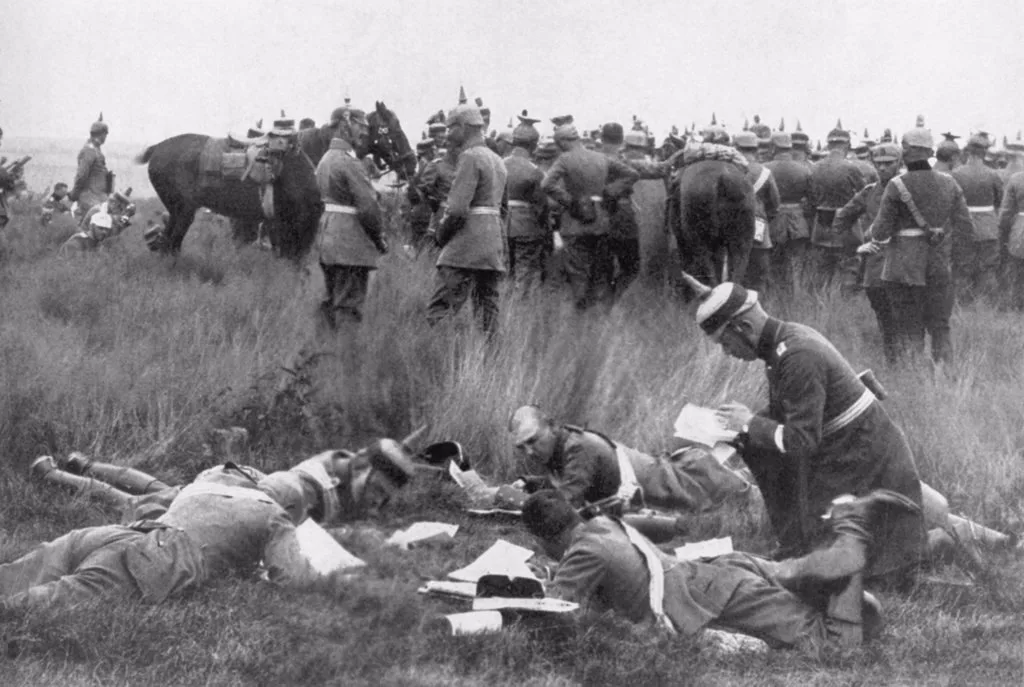
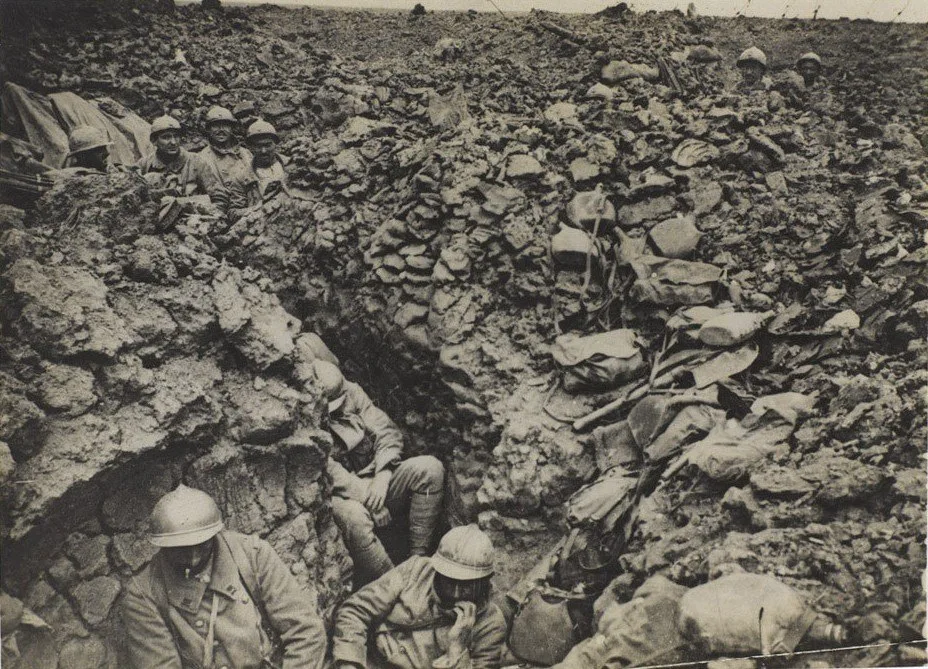
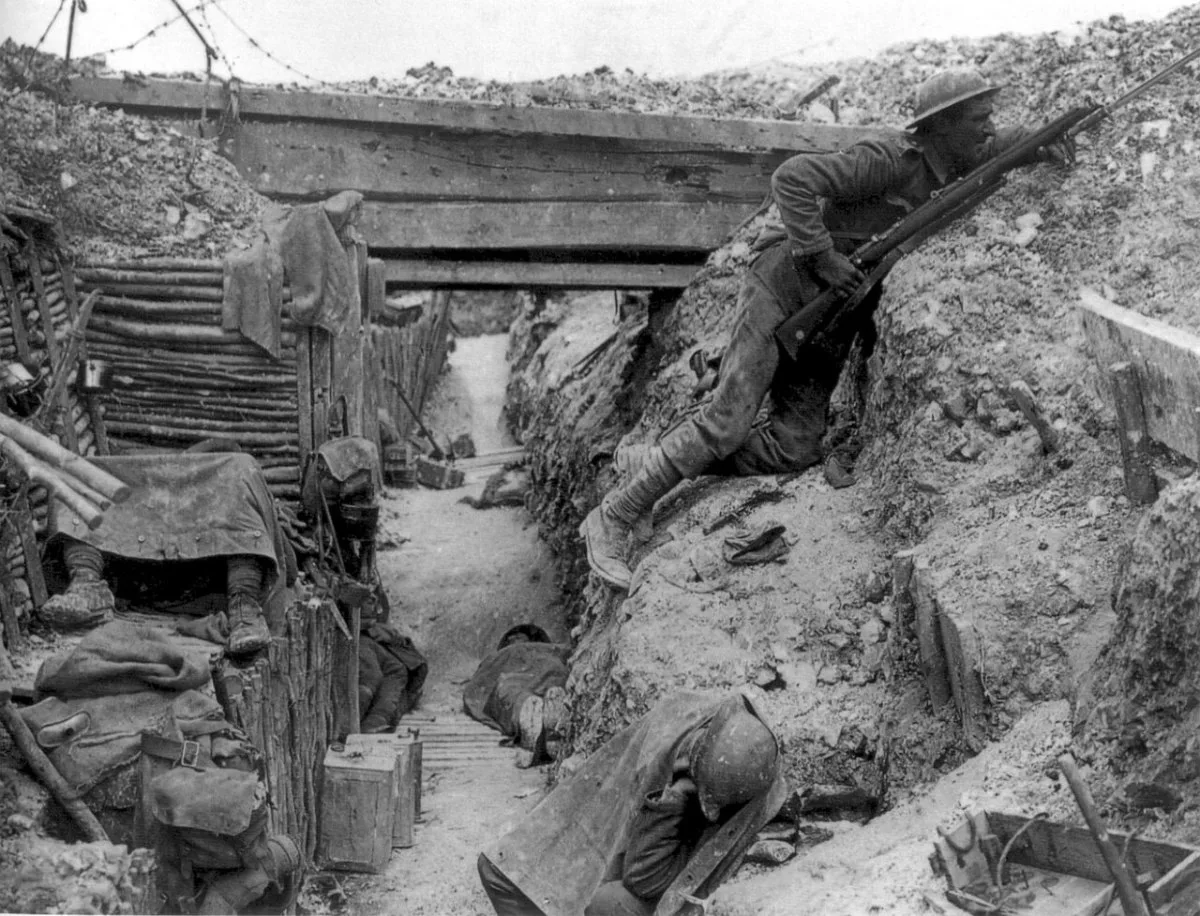
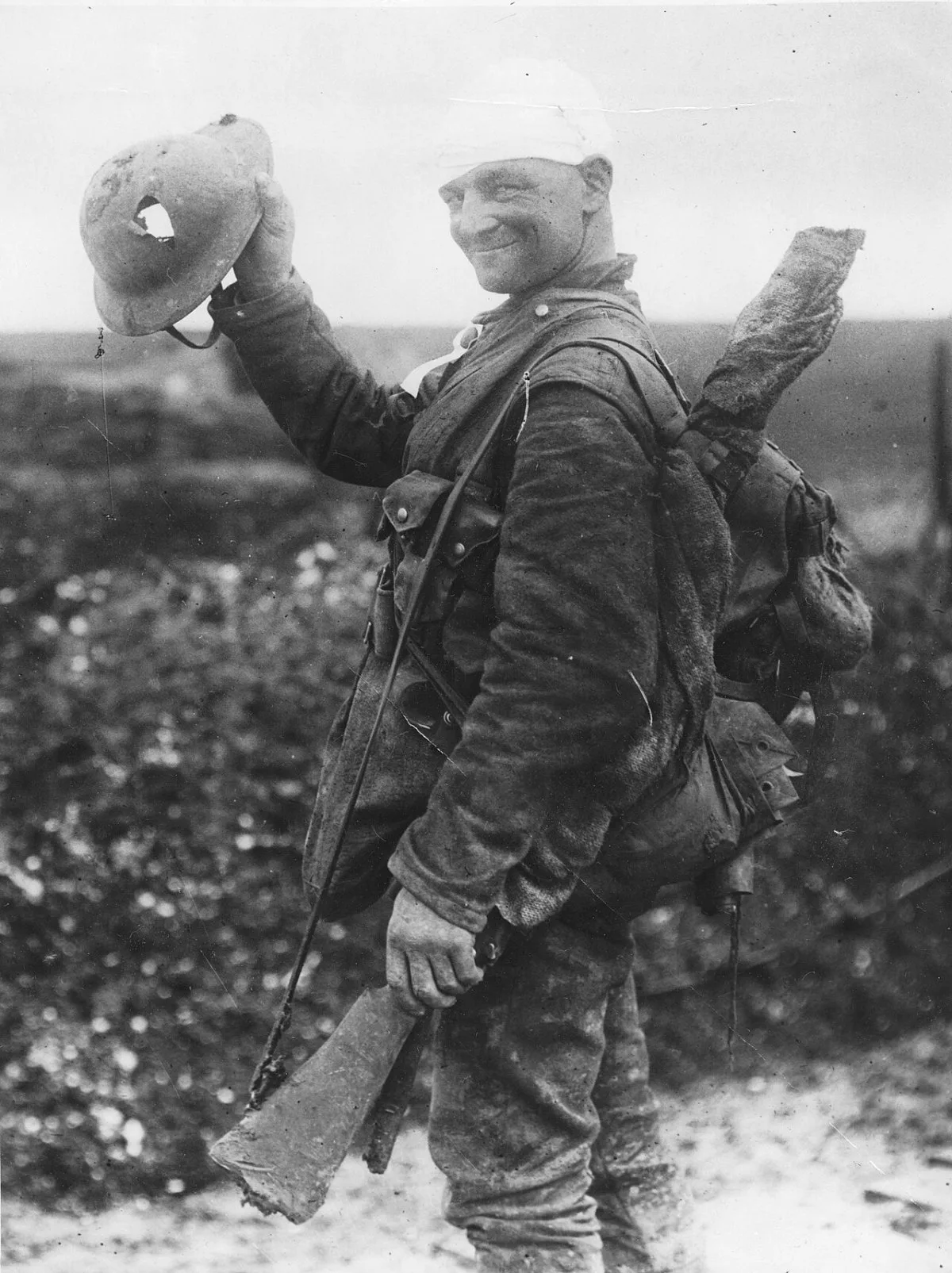
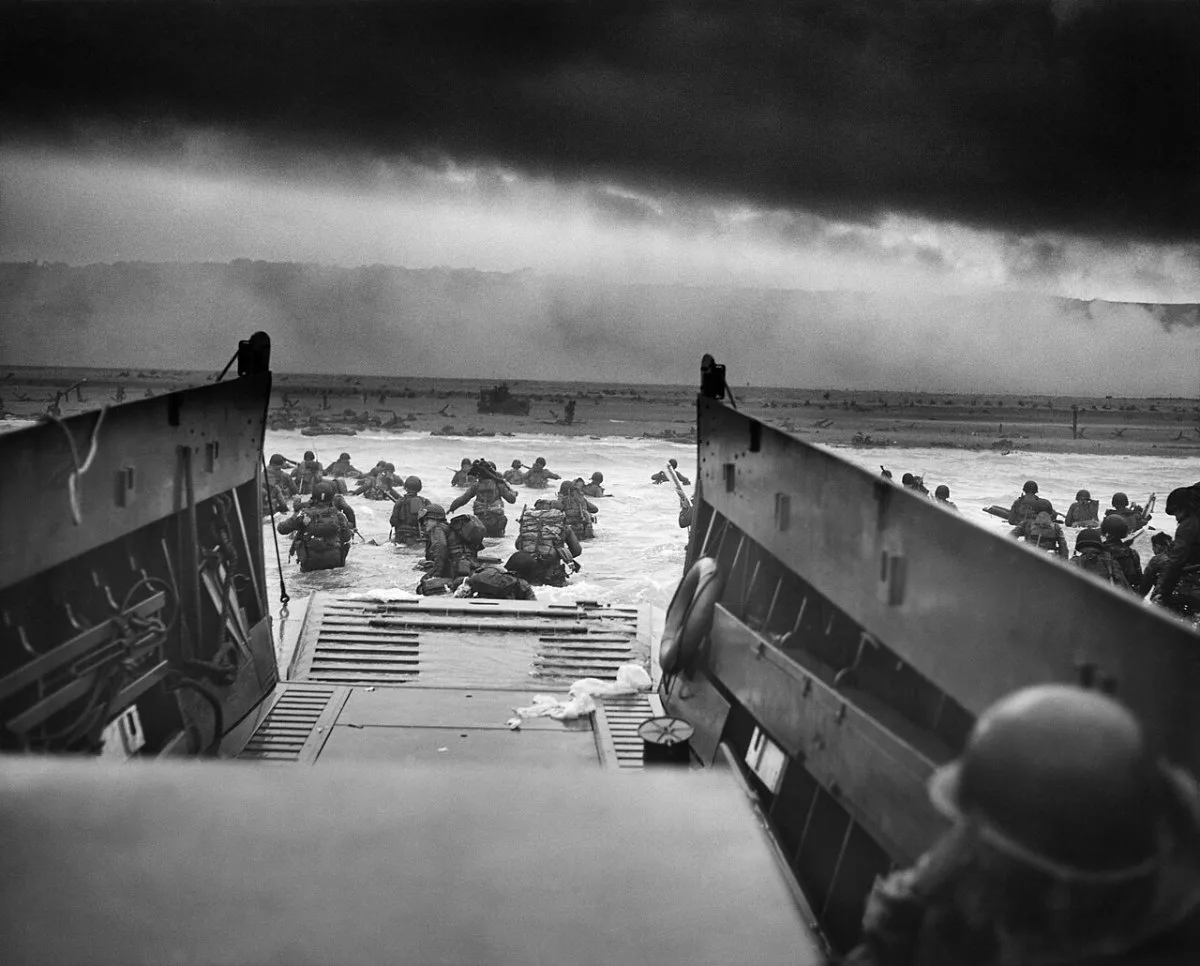
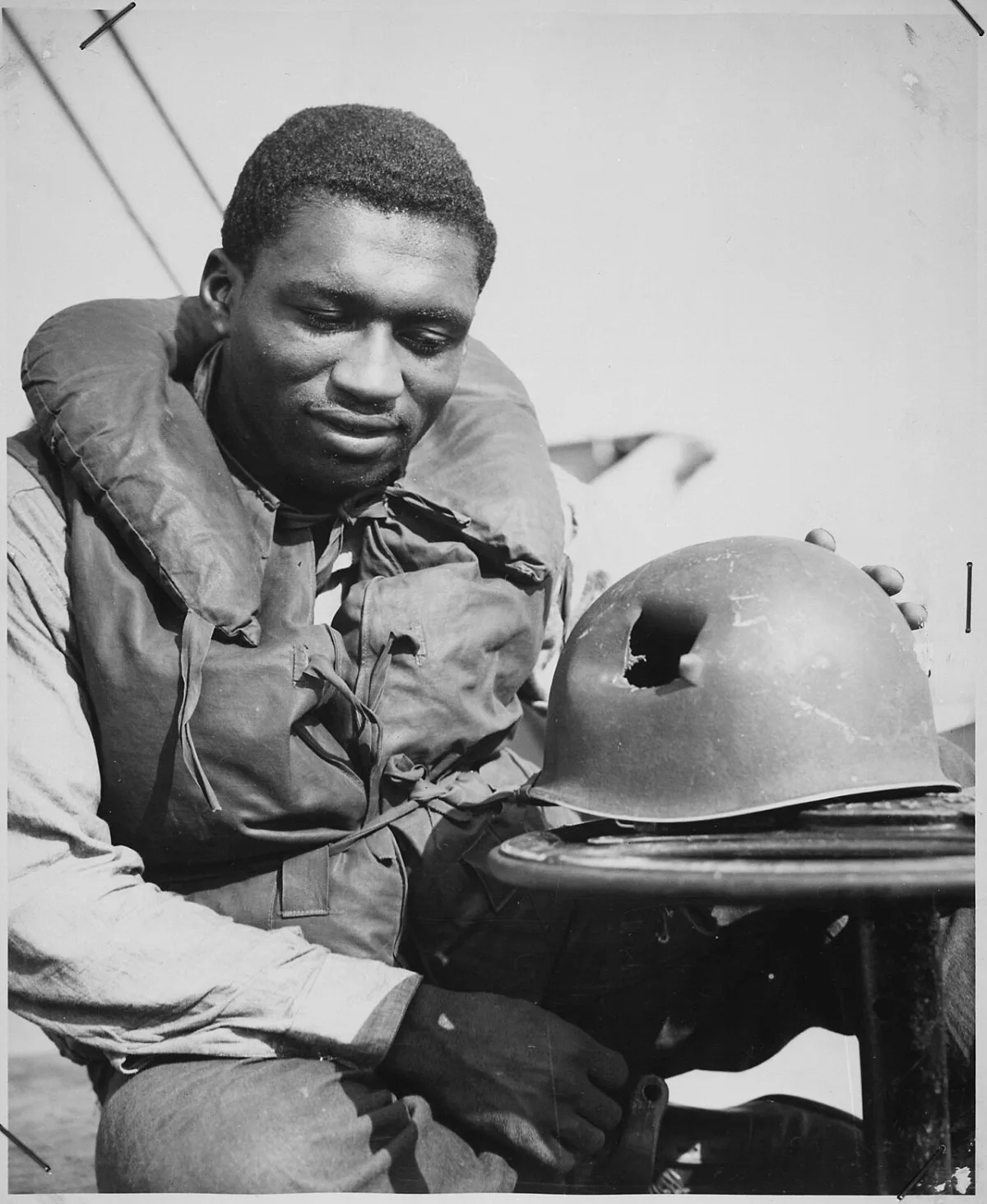
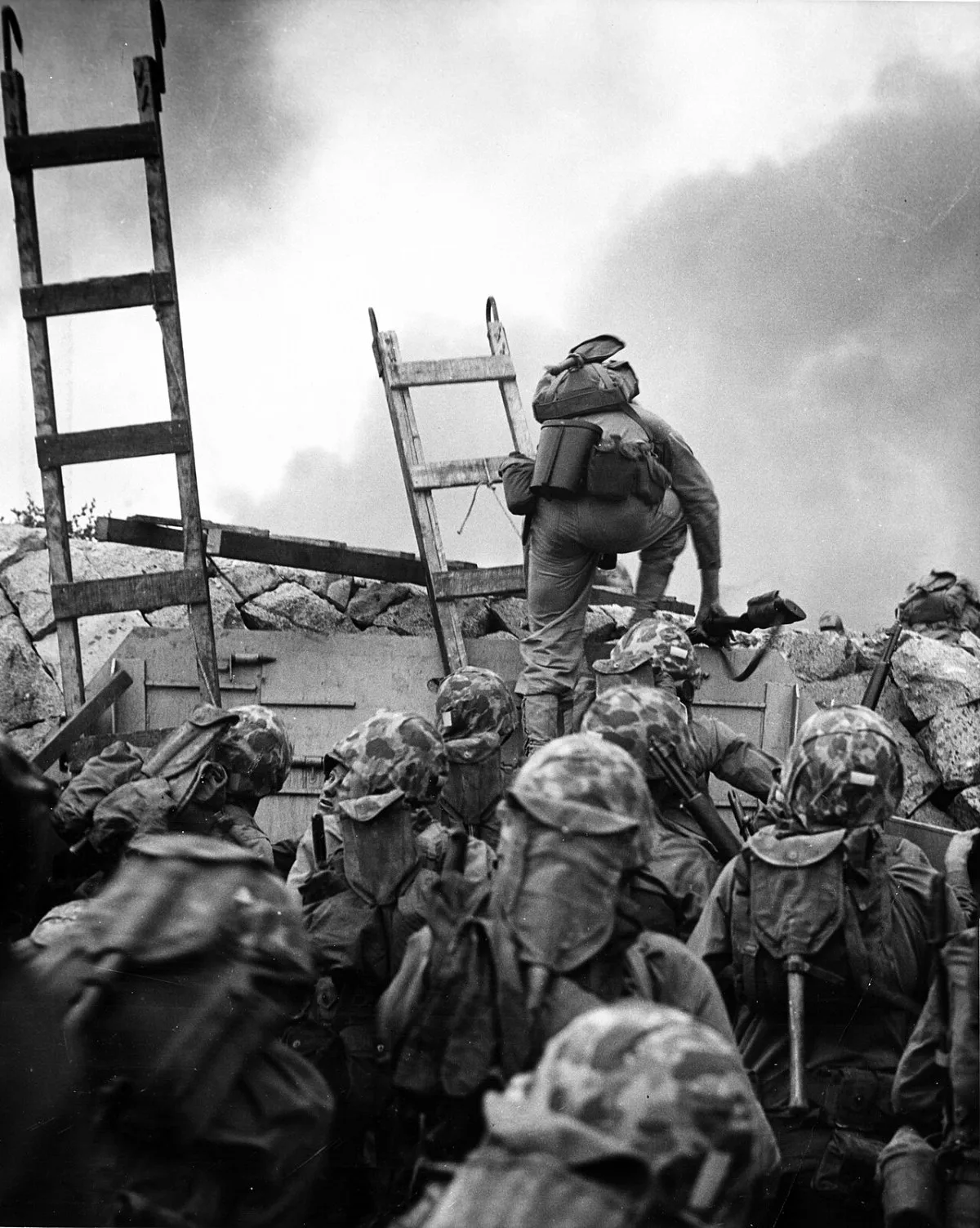
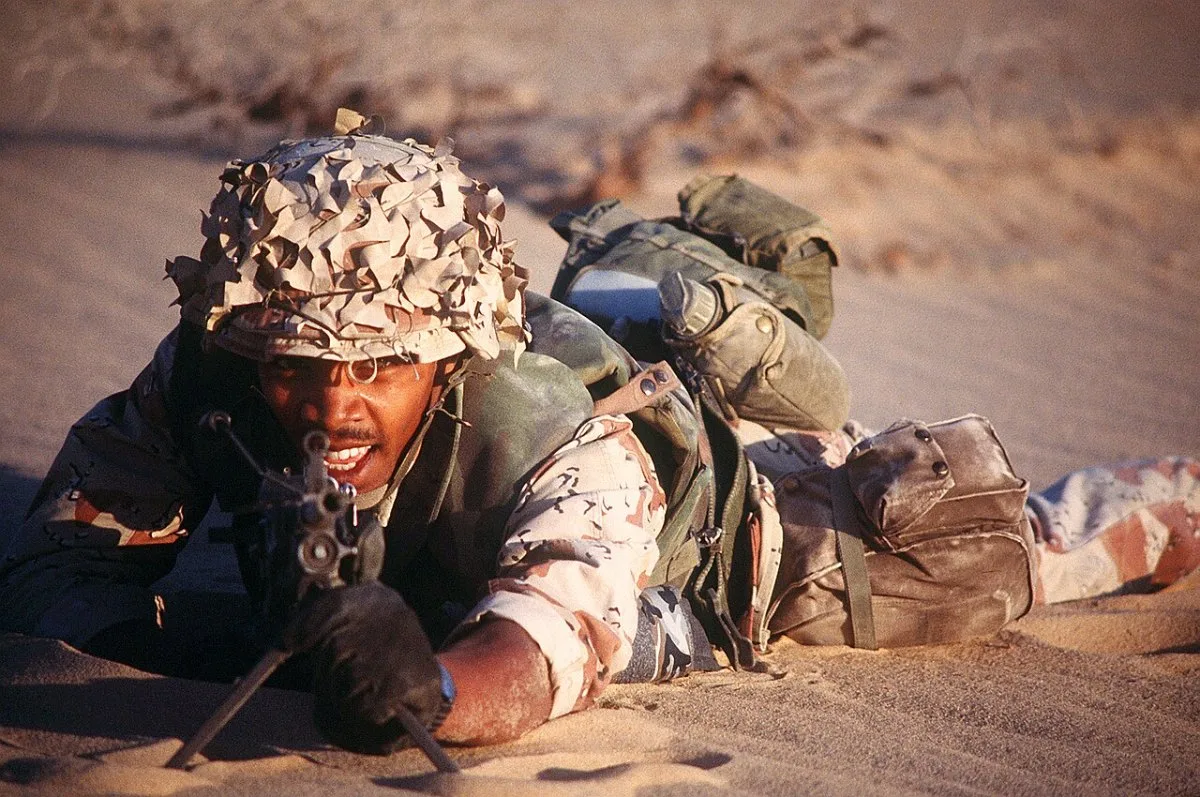
German officers in Pickelhaube helmets go over orders in a field, as printed in the Rock Island Argus on 19 September 1914. Within two years the spiked helmet was gone from the front line. Photo: Rock Island Argus, 19 September 1914. Public domain.French soldiers of the 87th Regiment shelter in their trench on Hill 304 at Verdun, 1916, in Adrian helmets. Photo: National Army Museum, London. Public domain.Men of the 11th Battalion, Cheshire Regiment, in a captured German trench at Ovillers-la-Boisselle in July 1916, during the Battle of the Somme. The sentry wears the Brodie steel helmet. Photo: John Warwick Brooke, Imperial War Museums Q 3990. Public domain.A wounded soldier holds up his Brodie helmet, pierced by a shell fragment, in December 1916. Photos like this were used to show the new steel helmets worked. Photo: National Library of Scotland. Public domain.“Into the Jaws of Death”: troops of the 1st Infantry Division wade ashore at Omaha Beach on 6 June 1944, every one of them in an M1 helmet. Photo: Robert F. Sargent, US Coast Guard, National Archives. Public domain.Coast Guard Fireman First Class Charles W. Tyner looks at the hole a shell fragment tore in his M1 helmet during the landings in southern France in 1944. He was only scratched. Photo: US Coast Guard, National Archives 513183. Public domain.First Lieutenant Baldomero Lopez leads his platoon of the 5th Marines over the seawall at Inchon, 15 September 1950. Their M1 helmets wear camouflage covers. Photo: US Marine Corps, Naval History and Heritage Command NH-96876. Public domain.A US Marine aims his M249 during Operation Desert Storm, 1991. His PASGT helmet wears a desert camouflage cover. Photo: Sgt. Brad Mitzelfelt, US Marine Corps. Public domain.
Where these photos come from
Photographs taken by US government employees in the course of their work, such as Office of War Information and military photographers, are generally in the public domain in the United States. We use copies from the US National Archives, the Library of Congress and Wikimedia Commons, and check each one's rights statement before adding it.